
 Dr. Wendy Rose-Hyatt
 Dr. Jake Hyatt
 Dr. Allyson Hyatt
Dental Bridges: A Durable Solution for Missing Teeth
A missing tooth affects more than the look of your smile. It can shift your bite, place extra pressure on nearby teeth, and impact your long-term oral health. At Caring Dental, we provide custom dental bridges to restore strength, function, and confidence for patients throughout Middle River.
Dr. Wendy Rose-Hyatt, Dr. Jake Hyatt, Dr. Larry Amsterdam, and Dr. Allyson Hyatt work closely with each patient to determine the right type of bridge and ensure lasting results.
What Is a Dental Bridge?
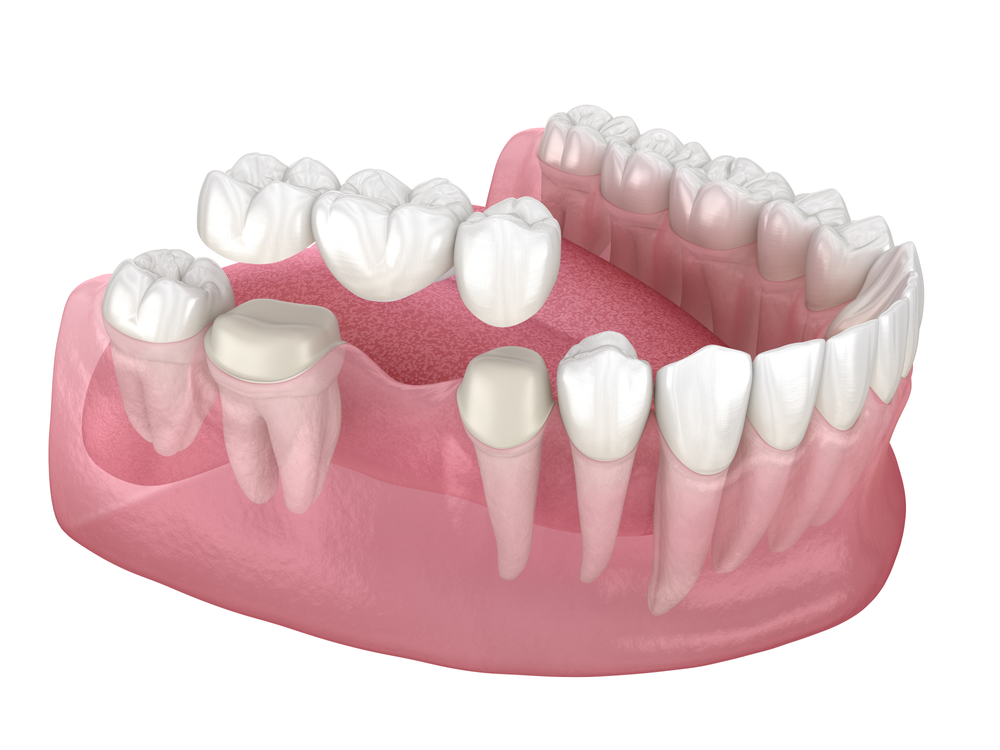
A dental bridge is a fixed partial denture designed to replace a false tooth by anchoring it to the abutment teeth on either side of the gap. The artificial replacement, often called a prosthetic tooth, fills the space left by tooth loss and is supported by dental crowns placed over the prepared teeth.
This creates a stable system that restores chewing ability and protects the supporting teeth on both sides of the gap. A new dental bridge blends in with your natural teeth, especially when crafted from a variety of materials such as porcelain, metal, or a combination of these materials with a porcelain framework.
What Are the Main Types of Dental Bridges Available?
There are several types of dental bridges, and each type of dental bridge is selected based on your specific needs. Our dentists will explain the differences and recommend the best option based on the number of teeth involved and the condition of your gum tissue and surrounding structures.
Traditional Dental Bridge
The most common type of bridge is supported by crowns on both adjacent teeth. Ideal when you have healthy teeth on each side of the missing tooth.
Cantilever Bridge
Anchored on only one abutment tooth. This may be used when only one natural tooth is available on one side of the gap.
Maryland Bridge
Often used for front teeth, this design uses metal wings bonded to the back of nearby teeth rather than full crowns.
Implant Bridge
Supported by dental implants instead of natural teeth. This option does not rely on altering adjacent teeth and is helpful when multiple teeth are missing.
What Is the Process for Getting a Dental Bridge From Start to Finish?
The dental bridge procedure typically involves two visits.
First Visit
The first step includes preparing the abutment teeth. A small amount of enamel is removed so the dental crowns will fit properly. We use a local anesthetic to keep you comfortable. Impressions are then sent to a trusted dental laboratory, where your custom bridge is created.
Before you leave, we place a temporary bridge to protect the area.
Second Visit
At your second visit to our Middle River dental office, we remove the temporary bridge and check the fit of your permanent bridge. After confirming comfort and alignment, it is secured with strong dental cement.
The next step is making sure your bite feels balanced and natural. Once complete, your new bridge should look and function like your original tooth.
What Are the Benefits and Potential Drawbacks of Getting a Dental Bridge?
Before choosing a dental bridge, it helps to understand both the advantages and the considerations involved. Dental bridges are a trusted solution for replacing missing teeth, but like any restorative treatment, they work best when they align with your oral health needs, lifestyle, and long-term goals.
Benefits
Dental bridges offer several practical and aesthetic benefits, especially when tooth loss is addressed early and the surrounding teeth are healthy.
- Restores chewing and speaking ability by filling the space left by a missing tooth
- Improves the appearance of your smile with a natural-looking artificial tooth
- Helps prevent nearby teeth from shifting toward the open space
- Supports overall dental health by maintaining proper bite alignment
- Typically involves less recovery time than treatments that require oral surgery
Potential Drawbacks
While dental bridges are a reliable option, there are a few factors to consider when deciding if this treatment is right for you.
- Requires reshaping of supporting or adjacent teeth to place dental crowns
- May need replacement over time due to normal wear
- Not always recommended if gum disease or significant tooth decay is present
With proper care, including daily cleaning around the bridge and regular dental visits, many patients enjoy long-lasting results and improved comfort from their new bridge.
How Do Dental Bridges Compare to Dental Implants for Restoring Missing Teeth?
Dental bridges and dental implants are both effective options for replacing a missing tooth, but they differ in how they are placed, how they function, and what they require from surrounding structures. A dental bridge relies on the adjacent teeth on each side of the gap for support. These supporting teeth, also called abutment teeth, are reshaped and crowned to hold the artificial tooth in place. Because this process does not typically involve oral surgery, bridges often have a shorter treatment timeline and a faster adjustment period. For many patients, especially those with healthy nearby teeth, a bridge can be a practical and predictable solution.
Dental implants, on the other hand, replace the tooth root as well as the visible portion of the tooth. An implant is placed into the jawbone during oral surgery and later restored with a crown, creating a stand-alone solution that does not depend on adjacent teeth. This approach can help preserve bone in the area of tooth loss and may offer added longevity. However, implants require sufficient bone, a longer healing time, and a more involved treatment process.
The American Dental Association recognizes both options as reliable methods for restoring function and oral health. Our dentists help patients weigh factors such as recovery time, long-term maintenance, cost, and the condition of surrounding teeth to determine which option best supports their dental health goals.
How Many Teeth Can I Replace?
This is a suitable treatment option if you are only missing one or two teeth. If the two missing teeth are right next to each other, you may still be able to use a dental bridge. On the other hand, if you are missing more teeth than that, you might be better off learning about separate implants or removable partial dentures.
Our dentists would be happy to discuss your options with you. That way, we can find the best one to meet your needs.
How Long Will My Newly Placed Dental Bridge Last?
As long as you take care of your dental bridge, it is not unusual for it to last ten years or more. You need to ensure that you take care of it appropriately, which means brushing and flossing your teeth daily. You also need to visit our office twice per year for regular cleanings. That way, we can ensure that your mouth is healthy and that all of your teeth are functioning as they should. If you would like to learn more about the benefits of dental bridges, we are here to help you.
Personalized Bridge Care in Middle River, MD
At Caring Dental, we understand that every smile is different. Whether you need a bridge for back teeth or a more cosmetic solution for front teeth, our team in Middle River, MD, focuses on comfort, durability, and natural aesthetics.
Patients trust Dr. Wendy Rose-Hyatt, Dr. Jake Hyatt, Dr. Larry Amsterdam, and Dr. Allyson Hyatt for honest guidance and customized treatment planning. Our goal is always to restore your smile while protecting your long-term oral health.
If you are ready to replace a missing tooth and protect the sides of the bridge and surrounding teeth, we are here to help. Call us at 410-807-3135 to schedule an appointment!